
Circuits, hookups and chargers
New circuits and outlets in the Phoenix Valley
A garage freezer, a workshop saw, a kitchen appliance that trips the breaker, or outlets where there are none. Each gets its own properly sized circuit from the panel.
- Typical circuit
- 20 amps on 12 AWG copper
- Install time
- 2 to 5 hours
- Estimate
- Free and in writing
Signs a room needs its own circuit
- The garage freezer and the microwave share a breaker, and it trips.
- I run extension cords across the room because there is no outlet on that wall.
- The kitchen breaker trips when the toaster and the coffee maker run together.
- I need a 240 volt outlet for a welder, a kiln or a range.
What a new circuit involves
A new circuit starts at the panel. Shane checks for a free slot and enough capacity, picks the breaker and the wire for the load, and plans the route to where you need power. A 20 amp circuit runs on 12 AWG copper, a 15 amp circuit on 14 AWG, and 240 volt circuits for a range, a dryer or a welder step up from there.
Inside a finished house we fish the cable down the wall from the attic, so the only hole is the box itself. In garages and shops, surface conduit on the wall is often cleaner and faster, and it leaves room to add later. If a wall has to be opened, we tell you before we cut.
What a new circuit costs
Prices on these pages are typical ranges for Phoenix Valley homes. Shane gives you the real number in writing after he sees the job.
Dedicated 20 amp circuit
$350 to $900
Outlet added to an existing circuit, each
$150 to $300
What moves the price
A dedicated 20 amp circuit usually runs $350 to $900 depending on the run. Outlets added to an existing circuit are $150 to $300 each.
The low end is a circuit to a wall near the panel with open attic above. The high end is a long run across the house, a 240 volt circuit, or a route that needs conduit outside.
What moves the number
- Distance to the panel
- A circuit to the wall behind the panel is an hour. One across the house through the attic in July is half a day.
- Attic access
- Open trusses are easy. A finished vaulted ceiling or a flat roof means fishing walls or running conduit.
- Amperage and voltage
- A 15 amp outlet circuit is one price. A 50 amp 240 volt circuit for a welder or a range needs heavier wire and a bigger breaker.
How the options compare
| 15 amp | 20 amp | 240 volt | |
|---|---|---|---|
| Copper wire | 14 AWG | 12 AWG | 10 AWG at 30 amps, heavier above that |
| Typical use | Lights and bedroom outlets | Kitchens, baths, laundry and garages | Dryers, ranges, welders, spas and chargers |
| Outlet | 15 amp | 15 or 20 amp, 20 amp for a single outlet | Matched to the appliance plug |
| Protection | AFCI in living areas | GFCI or AFCI by room | GFCI where the location calls for it |
Get a written price for your new circuit.
Tell us what you plan to plug in and where, and Kai calls back the same business day to set the visit.
What the price includes
What is included
- Breaker, wire and boxes sized to the load
- GFCI or AFCI protection where required
- Permit when the job needs one
- Outlet covers that match what is on the wall
- Tamper-resistant outlets, as code requires
What is not included
- Drywall patching where a wall had to be opened
- Repairs to an existing circuit that has other problems
- Stucco patching where an outdoor box goes in
How the job goes
- 1
Visit
Within a few days of your call Shane checks the panel, the route and what you plan to plug in.
- 2
Permit
One to three business days when needed New circuits need a permit in every city we serve, and we file it before the install.
- 3
Install
2 to 5 hours for most circuits We run the circuit, set the boxes and install the outlets.
- 4
Test and inspection
Inspection within a few days Every outlet is tested before we leave.
The number on the quote is the number on the invoice.
Permits, inspection and code
A new circuit is permitted work in every city we serve. Homes outside city limits file with Pinal County or Maricopa County.
The permit office and the utility change by city. We cover Ahwatukee, Maricopa, Mesa, Queen Creek and Apache Junction.
What code asks for
- A 20 amp circuit uses 12 AWG copper wire. A 15 amp circuit uses 14 AWG.
- Kitchens need at least two 20 amp circuits for the countertop outlets, and laundry areas and bathrooms each get a 20 amp circuit of their own.
- Since the 2017 code, an attached garage gets at least one 20 amp circuit for its outlets, and garage outlets need GFCI protection.
Photos from our jobs
Tap a photo to see it larger.
What customers say
Quoted word for word.
I would highly recommend this company to anyone. He is an excellent electrician and is wonderful to work with. I would rate him higher than a 5 but that is all they will give me.
The license and the record
- Arizona ROC license
- 326650, class R-11
- BBB rating
- A+, zero complaints
- In business
- Since 2007
- Estimates
- Free, in writing
Questions about new circuits and outlets
Anything else, call (602) 879-5489 or send the form below.
Can you add outlets without opening the wall?
Often, yes. Surface conduit in a garage or shop is clean and fast. Inside the house we fish wire through the wall from the attic when there is access.
Why does my kitchen keep tripping?
Most older kitchens have one or two circuits doing the work of five. Code now calls for two 20 amp small-appliance circuits plus dedicated circuits for the microwave, dishwasher and disposal.
Do I need a permit for a new outlet?
In Phoenix and most Phoenix Valley cities a new circuit needs a permit. Replacing a device on an existing circuit does not.
Can you add a 240 volt outlet in the garage?
Yes. A welder, a kiln, a compressor or a future EV charger each want a 240 volt circuit sized to the nameplate.
Related work
Jobs that often come up with a new circuit.
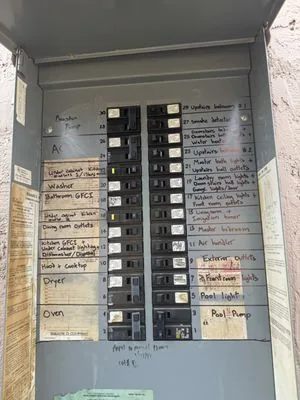
100 to 200 amps
Panel upgrades
100 to 200 amp service changes, new breakers, and panels that have run out of room.
Details
Fan boxes listed up to 70 lb
Ceiling fans and fixtures
Fans, pendants, chandeliers and recessed cans, hung on a box rated for the load.
Details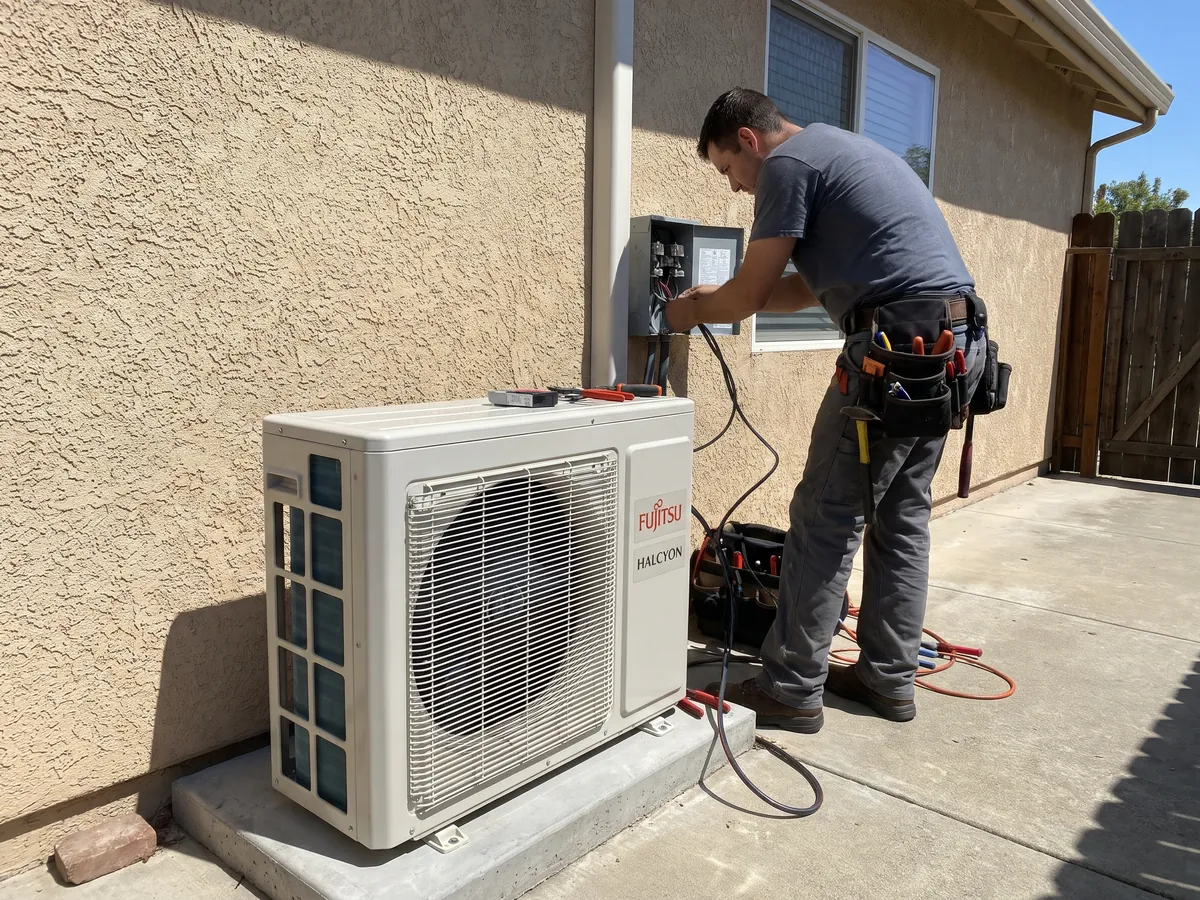
240 volts, sized to the nameplate
Mini-split circuits
Power for the garage, casita or add-on room the installer will not wire.
Details
Get a free estimate on new circuits and outlets.
Send the form and Kai calls or texts back to set a time. Shane looks at the actual job and writes the price. No charge for the visit.
What happens next
- Kai gets back to you the same day.
- Shane comes out and looks at the actual panel, circuit or roofline.
- You get the price and the install date in writing.
Rather talk? Call (602) 879-5489.